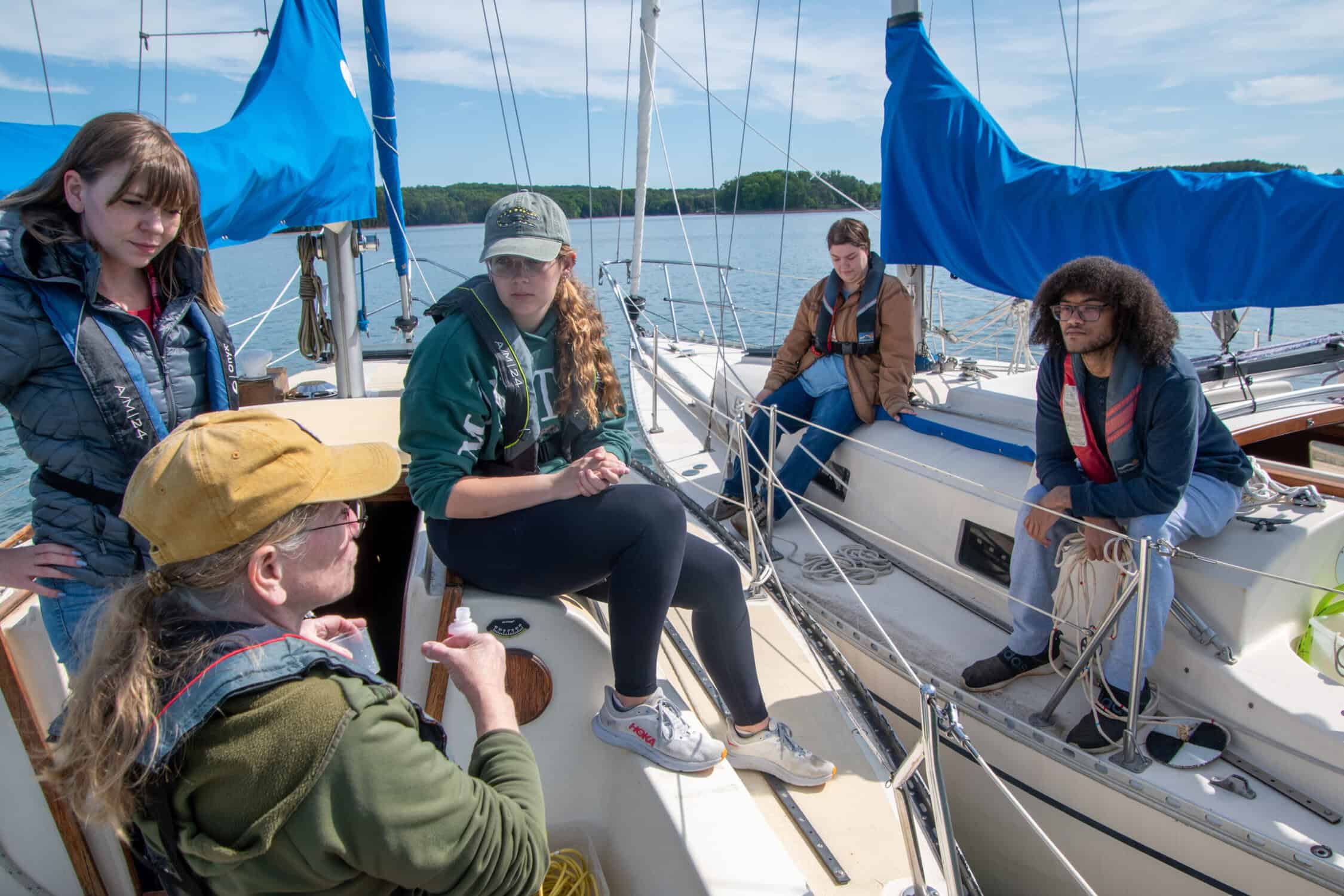
The environmental sustainability major at Ferrum College is more than just science! This program challenges students to think critically to explore solutions to current environmental issues by including not only the environment but also economic and social aspects.
You will take a core of environmental courses, including Introduction to Environmental Science, Foundations of Environmental Sustainability, Fundamentals of Ecology, Fundamentals of Ecology, and Advanced Environmental Sustainability.
An introduction to environmental sustainability and sustainable development and the importance of thinking critically, creatively, and holistically to find solutions that balance environmental care, economic growth, and social well-being.
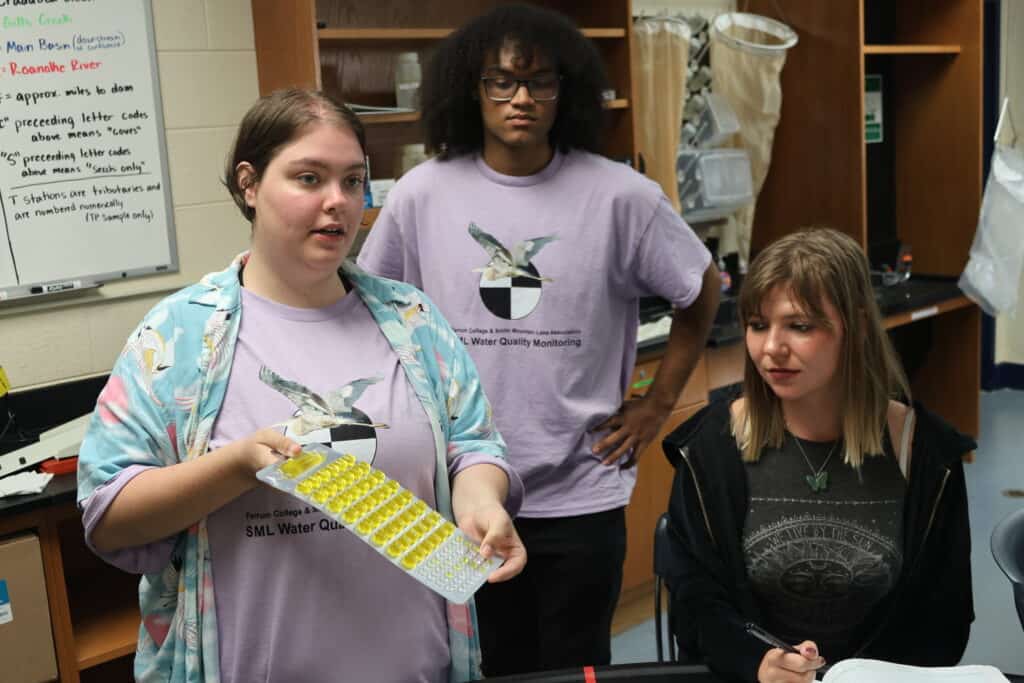
An overview of tools and techniques used in environmental monitoring. Lecture and lab content focuses on hydrology, agriculture, biodiversity, climate change, and energy systems.
Students can choose between a course in Natural Resource Policy and Economics, which introduces them to natural resource policies and economics, including legal frameworks, impact analyses, and valuation methodologies, or a course in Policy Analysis, which is a study of the concepts, procedures, and substantive approaches in the design and evaluation of public policy (case studies provide in-depth treatment of actual policymaking).
Environmental educators teach people about the natural world, its importance, and how to protect it. They create and deliver engaging educational materials and programs, often in diverse settings such as schools, parks, or community centers, to inspire environmental awareness and action.
Environmental policy analysts provide research and analytical services for policy briefs related to energy sources, climate change, environmental justice, environmental health, and related issues.
Hydrologists study how water moves across and through the Earth’s crust. They study how rain, snow, and other forms of precipitation impact river flows or groundwater levels and how surface water and groundwater evaporate back into the atmosphere or eventually reach the oceans.
Environmental engineers use the principles of engineering, soil science, biology, and chemistry to develop solutions to environmental problems. They work to improve recycling, waste disposal, public health, and water and air pollution control.
A sustainability certificate can be earned by completing 10 hours of core courses. In addition to those courses, a Sustainability Minor can be earned by completing 8 more hours of courses focused on sustainability and related topics. For requirements and choices, see the current Ferrum College Catalog and this page on the Sustainability Minor.
View the catalog for all program courses and degree requirements.