
Ferrum College is accredited by the Southern Association of Colleges and Schools Commission on Colleges (SACSCOC) to award baccalaureate, master’s, and education specialist degrees. Questions about the accreditation of Ferrum College may be directed in writing to the Southern Association of Colleges and Schools Commission on Colleges at 1866 Southern Lane, Decatur, GA 30033-4097, by calling (404) 679-4500, or by using information available on SACSCOC’s website.
Ferrum College is accredited by University Senate of the United Methodist Church and is a member of the National Association of Schools and Colleges of the United Methodist Church.
Ferrum College is responsible for compliance with the Southern Association of Colleges and Schools Commission on Colleges (SACSCOC) Principles of Accreditation, Standard 14.2 on Substantive Change and its associated policy statement, Substantive Change for SACSCOC Accredited Institutions, as a condition of continued regional accreditation and eligibility for federal Title IV funding. Both require accredited institutions to “have a policy and procedure to ensure that all substantive changes are reported to the Commission in a timely fashion.”
The purpose of Ferrum College’s Substantive Change Policy is to:
Substantive change is a significant modification or expansion of the nature and scope of an accredited institution. Under federal regulations, substantive change includes:
The SACSCOC Board of Directors has approved additional substantive changes that require notification and, in some cases, approval prior to implementation. An example involves the reporting of educational programs in which direct assessment competency-based methods are proposed to be used to award degrees. A comprehensive set of substantive changes is outlined in great detail in the latest edition of the Commission’s Policy Statement, Substantive Change for SACSCOC Accredited Institutions, which is published on the commission’s website (sacscoc.org). Because federal and SACSCOC policies change frequently on substantive change, Ferrum College and its members are advised to consult the latest published edition of the commission’s policy regularly. See also the Glossary of Terms section of the Substantive Change Policy for SACSCOC Accredited Institutions for proper interpretation of specific terms referenced in the commission’s Policy Statement.
All administrative and academic officers and their direct reports at Ferrum College should be fully informed about and act in compliance with Ferrum College’s and SACSCOC’s substantive change policies and procedures.
Early notice of all proposed substantive changes must be funneled by the involved administrative and academic officers to the Ferrum College SACSCOC liaison. Notification of such proposed substantive changes should be made to the liaison early in the planning process, so that SACSCOC reporting requirements and timetables can be established and implemented in a timely and appropriate fashion by the liaison with the involved institutional parties.
To facilitate that early notification, the provost will ensure that the processes for reviewing and approving: a) new degree program proposals delivered in all modes of instruction; b) proposed existing degree program closures; c) proposed new off-campus instructional sites; and d) proposed closures of existing off-campus instructional sites include a formal requirement that the Ferrum College SACSCOC liaison be informed of such proposals early in the academic planning and approval process. Should other less frequent proposed substantive changes emerge in the institutional planning process, the involved administrative and academic officers should inform the Ferrum College SACSCOC liaison early in the planning process of such possible substantive changes so that timely and appropriate action is taken with SACSCOC.
Only two college officials are typically recognized by SACSCOC as the appropriate reporters of proposed substantive changes at Ferrum College—the Ferrum College president and the Ferrum College SACSCOC liaison.
Communications with SACSCOC about substantive changes should funnel to FC’s SACSCOC liaison for transmittal to SACSCOC by the liaison or the president.
The Ferrum College SACSCOC liaison is also responsible for the following:
February 11, 2020 (Ferrum College’s Initial Policy Statement)
There are no exceptions to this policy unless identified as exceptions in SACSCOC policy.
The policy applies to all changes of the university defined by SACSCOC as a “substantive change” in the commission’s Policy Statement on Substantive Change for SACSCOC Accredited Institutions.
Administrative and Academic Officers
Ferrum College SACSCOC Institutional Accreditation Liaison
Ferrum College President
SACSCOC Institutional Accreditation Liaison
The Master of Science in Clinical and Counseling Psychology program at Ferrum College is designed to generally prepare graduates for clinical licensure as a Licensed Professional Counselor (LPC) or a Licensed Psychological Associate/Practitioner (LPA/LPP). The program requires 60 credit hours, aligning with the typical requirements for licensure in both professions across many states.
It is crucial to note that while our program is structured to meet the academic requirements for both license types, the ultimate determination of licensure eligibility lies with each state’s licensing board. Ferrum College cannot guarantee licensure, as licensure is subject to the policies and regulations set forth by individual state licensing boards.
Ferrum College holds regional accreditation from the Southern Association of Colleges and Schools Commission on Colleges (SACSCOC). However, as a new MS in Clinical and Counseling Psychology program, it has not yet applied for accreditation through the Council for Accreditation of Counseling and Related Educational Programs (CACREP), the American Psychological Association (APA), or the Masters in Psychology and Counseling Accreditation Council (MPCAC). The program intends to pursue accreditation with one or more of these bodies in the future, but the College cannot guarantee the outcome of the respective accreditation processes.
Prospective students are advised to research and understand the licensure requirements of the state in which they intend to practice. Ferrum College encourages students to contact their state licensing board for the most current and specific information regarding licensure eligibility. We are available to help prospective students locate licensure information for their state and preferred licensure type.
For further inquiries regarding the Ferrum College Master of Science in Clinical and Counseling Psychology program, please contact the Program Director, Dr. Ryan Cooper (rrcooper@ferrum.edu) or Program Assistant, Jennifer Whitlow (jwhitlow@ferrum.edu).
The Ferrum College Master of Science in Clinical and Counseling Psychology has been designed to meet the Virginia requirements for LPC licensure; however, until our first cohort completes their degree and applies to the board, we cannot guarantee licensure results.
Virginia mandates candidates to “complete 60 graduate semester hours” through a master’s degree that offers “a sequence of academic study with the expressed intent to prepare counselors as documented by the institution” (which our program fulfills). Additionally, the program must have “identifiable counselor training faculty and an identifiable body of students who complete that sequence of academic study” (both of which our program possesses). Finally, the “academic unit must have clear authority and primary responsibility for the core and specialty areas” (which our program holds). While CACREP programs are presumed to meet these criteria, non-CACREP programs that are regionally accredited (we are) should meet these requirements as well.
We have proactively engaged the Virginia Board of Counseling and communicated that we are admitting students starting in Fall of 2024. The Board advised the College to maintain an/one LPC faculty (not a strictly psychological faculty) and suggested (but did not require) the College have at least three LPCs on faculty. Currently, the faculty team includes three (3) Licensed Professional Counselors and (3) Licensed Psychologists.
Virginians and/or those who plan to practice in Virginia should also be aware of coursework requirements (listed per 18VAC115-20-51), which include: professional counseling identity, function, and ethics; theories of counseling and psychotherapy; counseling and psychotherapy techniques; human growth and development; group counseling and psychotherapy theories and techniques; career counseling and development theories and techniques; appraisal, evaluation, and diagnostic procedures; abnormal behavior and psychopathology; multicultural counseling theories and techniques; research; diagnosis and treatment of addictive disorders; marriage and family systems theory; and a supervised internship of 600 hours, of which 240 hours of face-to-face client contact is required.
Prospective students are encouraged to review the Virginia Board of Counseling’s regulations closely.
SACSCOC approval was issued in February 2020.
Effective May 3, 2023, this nursing program is a candidate for initial accreditation by the Accreditation Commission for Education in Nursing.
Accreditation Commission for Education in Nursing (ACEN), 3390 Peachtree Road NE, Suite 1400, Atlanta, GA 30326, (404) 975-5000, http://www.acenursing.com/candidates/candidacy.asp.
Note: Upon granting of initial accreditation by the ACEN Board of Commissioners, the effective date of initial accreditation is the date on which the nursing program was approved by the ACEN as a candidate program that concluded in the Board of Commissioners granting initial accreditation.
Virginia Board of Nursing Conditional Approval.
Ferrum College is accredited by the Commission on Colleges of the Southern Association of Colleges and Schools Commission on Colleges (SACSCOC) to award baccalaureate, master’s, and specialist degrees. Ferrum College is also accredited by the University Senate of the United Methodist Church and is a member of the National Association of Schools and Colleges of the United Methodist Church. The Ferrum College BSW Program has been accredited by the Council on Social Work Education since 1976 and holds membership in the Virginia Social Work Education Consortium.
The Ferrum College Bachelor of Social Work (B.S.W.) is considered a professional degree, but it does not automatically convey licensure. B.S.W. graduates may apply to become a Licensed Baccalaureate Social Worker (LBSW) in Virginia: https://www.dhp.virginia.gov/Boards/SocialWork/ApplicantResources/LBSW/. Other states and jurisdictions may have different licensure requirements and procedures.
The teacher preparation program at Ferrum College is accredited by the Virginia Board of Education and nationally through the Council for the Accreditation of Educator Preparation (CAEP). View our accreditation status here.
Successful completion of an education major, including licensure assessments, leads to a collegiate professional license in the Commonwealth of Virginia. This license is valid for 10 years and renewable with additional professional development experiences. The following initial licensure areas offered by Ferrum College are approved by the Virginia Board of Education:
CAEP has developed four annual reporting measures for Educator Preparation Providers (EPP), which are used to provide information to the public on program outcomes and program impact.
Below are the four reporting measures for Ferrum College’s teacher education program.
Results from program completers and employers of program completers on the Virginia Uniform Performance Standards provide the EPP with one means of evaluating its impact on pre-K-12 learning and development.
The Commonwealth of Virginia does not provide EPPs with data related to CAEP Standard R4.1. To measure completer impact on learning, the EPP utilizes employer and completer data collected by the Virginia Education Assessment Collaborative (VEAC). VEAC is a collaboration of Virginia Educator Preparation Providers working together on assessment, data collection, and program improvement to positively impact our P-12 community partners. This partnership provides a centralized assessment structure for Virginia EPPs that standardizes and reduces the complexity of data collection for both the Virginia Department of Education (VDOE) and the Council for the Accreditation of Educator Preparation (CAEP).
Measure 1a. Completer impact in contributing to P-12 student learning and growth.
As a VEAC partner, the Ferrum College Teacher Education program submitted contact information for the last five years of program completers and their employers to VEAC in March 2025. Upon closing the survey in May 2025, the completer response rate was 17%, and the employer response rate was 67%.
Measure 1b. Completer effectiveness in applying professional knowledge, skills, and dispositions.
VEAC survey items measured the completers’ perceptions of how well the educator preparation program prepared them to perform the following competencies:
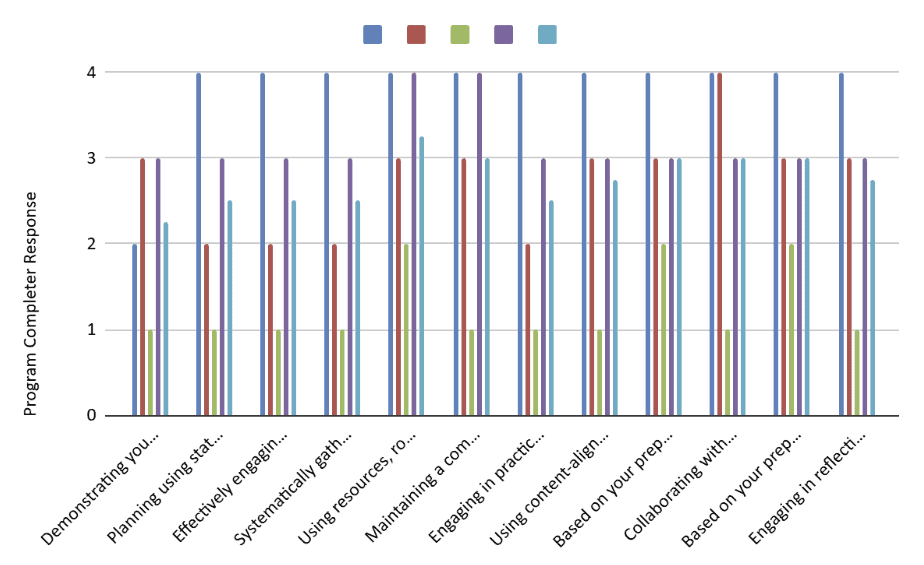
Figure 1: Completer Perceptions of Educator Preparation Program Effectiveness in Building Professional Competencies (VEAC Survey)
Completer responses had a mean score of 2.75 with a mean standard deviation across measures of 1.17. The standard deviation reflects one completers’ dissatisfaction with the program. *Overall, these scores indicate a positive perception from completers of the program’s role in preparing them to effectively apply professional knowledge, skills, and dispositions within schools and classrooms.
*Descriptive statistics, including means and standard deviations, are provided for reference to offer a general sense of response tendencies. The limited sample size of the VEAC survey precludes formal statistical analysis or generalization of findings. All surveys were reviewed individually to ensure a thorough and contextual understanding of each response. Figures on this page should be viewed as illustrative and considered in the context of the survey’s sample size.
The final item asked completers to rate their overall satisfaction with the following question:
Overall, how satisfied are you with your preparation from Ferrum College?
Respondents could respond “extremely dissatisfied, somewhat dissatisfied, neither satisfied nor dissatisfied, somewhat satisfied, or extremely satisfied.” To find the average overall satisfaction, responses are coded from 1 to 5, with higher values indicating higher satisfaction (Figure 2).
*Understanding of each response. Figures on this page should be viewed as illustrative and considered in the context of the survey’s sample size.
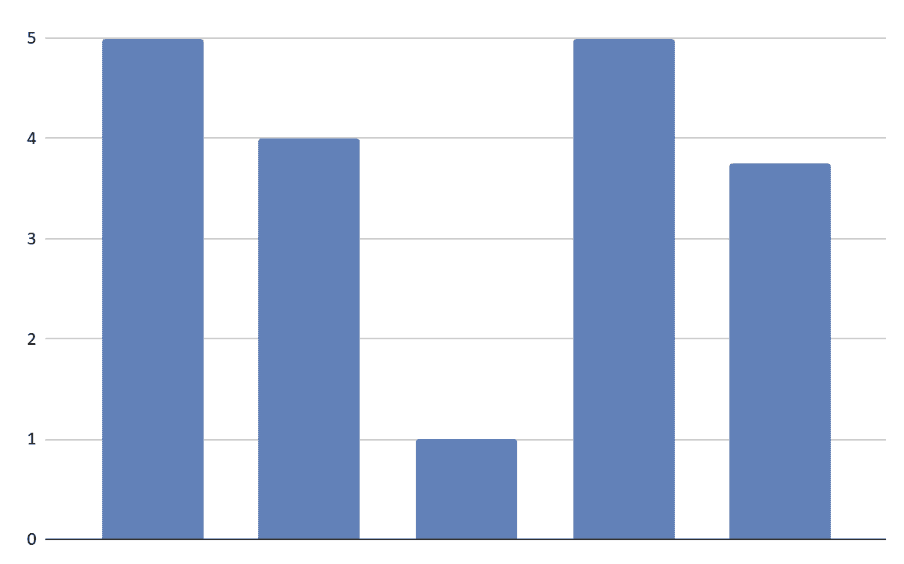
Completers reported a mean overall satisfaction score of 3.75 with a standard deviation of 1.89. These scores reflect a generally positive level of satisfaction with preparation received from Ferrum College, though the standard deviation indicates some variability in individual perceptions.
The EPP evaluates the satisfaction of employers based on survey data provided by principals. The satisfaction survey is disseminated in partnership with VEAC (Virginia Education Assessment Collaborative) to completers’ school principals as reported by the EPP and VDOE (Virginia Department of Education). Ferrum College had an 67% response rate on the VEAC Employer Survey.
Virginia Education Assessment Collaborative (VEAC) Employer Survey 2024-2025
Please rate the Ferrum College graduate’s performance on each of the following:
Employers responded to the questions 1-12 using a 4-point scale; the respondents could choose “Exemplary,” “Proficient”, “Developing/Needs Improvement,” or “Unacceptable.” Responses were coded from 1 to 4, with higher numbers indicating higher performance, to find the average rating (Figure 3).
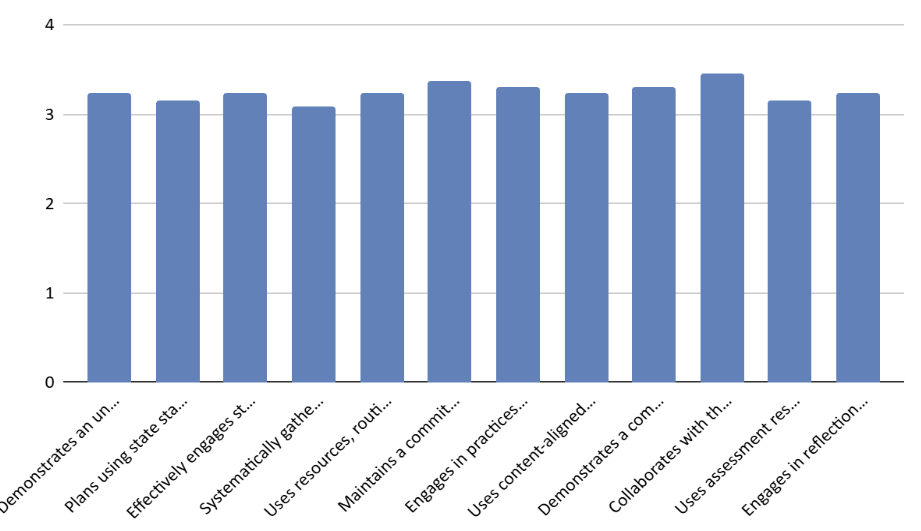
Employer responses had a mean score of 3.25 and a mean standard deviation across measures of 0.50. In all areas employers indicated that Ferrum completers reached proficiency, with low variance between results. This suggests Ferrum College completers were able to effectively enter P-12 schools and make an impact on students’ learning and growth.
The last item in the VEAC employer survey asks,
Respondent employers could respond “Fully ready (able to have an immediate impact on student learning)”, “Mostly ready (able to successfully meet the needs of most students),” “Moderately ready (in order to be successful, needed additional training, support, and coaching beyond what is typically provided to beginning teachers),” “Minimally ready (limited success meeting the needs of students and improving outcomes even with additional supports)” or “Not ready (unable to meet the needs of students even with additional supports).” On this five-point scale, higher values indicate more satisfaction, and lower values indicate more dissatisfaction (Figure 4).
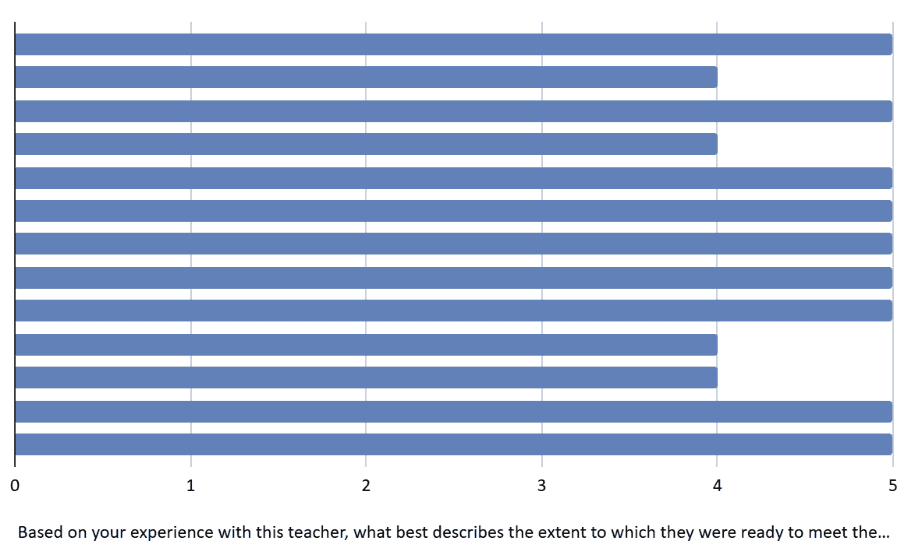
Employers reported a mean readiness score of 4.69 with a standard deviation of 0.48, indicating strong and consistent satisfaction with Ferrum College graduates’ readiness to meet the needs of students in their schools.
Measure 2:
The Teacher Education program values stakeholder engagement. Our stakeholder partnerships include the following:
The EPP reports the number of program completers who meet all licensure requirements through the VDOE Biennial Report and the Virginia Educator Preparation Program Profile.
Biennial Report Link
| Year of Graduation | Number of Program Completers | % Employed Following Graduation in the Field of Teaching | % Entering a Graduate Program following Program Completion | %Teaching in a Second Year Following Graduation | %Teaching in a Third Year Following Graduation |
|---|---|---|---|---|---|
| 2021 | 13 | 90.9% | 9.1% | 90.9% | 90.9% |
| 2022 | 7 | 71.4% | 0% | 71.4% | 71.4% |
| 2023 | 12 | 100% | 0% | 100% | 100% |
| 2024 | 3 | 66% | 33% | 66% | N/A |
| 2025 | 5 | 100% | 0% | N/A | N/A |
Data for measure 4 is collected by the EPP. At this time, the Virginia Department of Education does not provide information about the continued employability of program completers. It should be noted that some completers chose to further their education or pursue another career option during the three years of data collection. All program completers were eligible to apply for an initial Virginia teacher license upon graduation.
Completer Employability by Cohort Year 2021-2025
The Virginia Board of Education’s Licensure Regulations for School Personnel states that all candidates who plan to seek an initial Virginia teaching license must obtain passing scores on professional teacher’s assessments.1 Information on each of the required assessments is listed below. The complete list of required assessments can be found on Licensing Forms and Information, here.
Teaching Reading: Elementary (5205)
Teaching Reading: Elementary (5205) is a reading assessment that is required for individuals seeking initial licensure in any of the following endorsements (teaching areas): Early/Primary Education pre-K-3, Elementary Education pre-K-6, Special Education—General Curriculum, Special Education Hearing Impairments, and Special Education Visual Impairments. Test preparation materials, practice tests, and registration information are provided during the course sequence EDU 310-311; online materials and registration information can be found online at https://www.ets.org/praxis/site/test-takers/resources/prep-materials.html?examId=5205.
Praxis Subject Assessments
Praxis subject tests are required for the noted endorsement (teaching subject) areas for initial licensure unless an individual meets the exemption criteria.2 Individuals are required to satisfy the subject area test(s) requirement for only one endorsement area, but it must match an endorsement area in which the initial licensure is granted. For information regarding registration, test administration, fees, the policy for testing individuals with disabilities, etc., please refer to the website, www.ets.org, contact the Educational Testing Service (ETS) at 1 (800) 772-9476 or (609) 771-7395 for THE PRAXIS SERIES Registration Bulletin, or write to THE PRAXIS SERIES, ETS, P.O. Box 6051, Princeton, NJ 08541-6051. Hearing-impaired individuals using a Telecommunications Device for the Deaf (TDD) may call 1(800) 275-1391 for information.
PROFESSIONAL LICENSURE DISCLOSURE
Reciprocity Statement
The curriculum for programs customarily leading to licensure at Ferrum College has been designed to both prepare students for licensure exams and meet licensure requirements in the Commonwealth of Virginia. The licensure boards of each state are responsible for establishing requirements for licensure/certification for their state. Students who intend to relocate to any state other than Virginia should review the professional licensure disclosures pertaining to their program and consult with the state professional licensing board. Each state licensing board makes the ultimate decision as to whether or not an individual will be eligible to sit for licensure based on the rules and regulations in place at the time the individual submits their application for licensure.
Student Responsibility
Students who intend to relocate to another state following licensure in Virginia should review the specific academic requirements for the program in which they are enrolling. We highly recommend that students contact the applicable licensing board(s) in their state where they intend to obtain licensure before beginning their academic program. Many licensure boards have additional requirements beyond successful degree completion to obtain a license. It is the responsibility of the student completing the licensure program to check with the licensing board for the most current information and requirements. Ferrum College shall not be held liable if the student is unable to qualify for licensure or certification in any jurisdiction or cannot obtain a practicum/internship location. Students should use the Licensure Disclosure Tool to initially determine whether a Virginia license does meet licensure in a particular state, does not meet licensure in a particular state, or the program requirements are undetermined because Ferrum College cannot determine whether the program leads to licensure. Again, remember that state laws, regulations, and policies may change at any time. The state professional licensing boards make the ultimate decision as to whether or not an individual will be eligible for licensure based on the rules and regulations in place at the time the individual submits their application for licensure.
Ferrum College is committed to protecting your privacy when you visit our website. This policy is your guide to how we will handle information we learn about you from your visit to our website.
You provide information to Ferrum College when you fill out online forms on our websites or use a login-required service. Depending on the type of the service, we use your information in different ways as outlined below.
Our college websites have security measures in place to protect against the loss, misuse, or alteration of the information under our control.
Ferrum College does not sell, rent, or share your personal information with any outside organizations. Ferrum College will abide by all applicable laws governing the release of personal information.
Collective information about site users—but never individuals’ information—is used in marketing, advertising, and other relationships with third parties.
HOW WE USE THIS INFORMATION
Ferrum College uses information collected automatically to better understand the needs of website visitors so that we may improve our websites and services.
We collect limited, nonpersonal identifying information your browser makes available when visiting websites. This information—which helps us assess the effectiveness of our websites—includes:
Data collected using the following services:
Our site provides users the opportunity to opt out of receiving communications from us. You may also update your information previously provided to us through another online form.
HOW TO UPDATE YOUR INFORMATION
The Higher Education Opportunity Act of 2008 (HEOA) amends the Higher Education Act of 1965 (HEA) to revise and reauthorize HEA programs. It was signed into law on August 14, 2008. The Final Rule was published in the Federal Register on October 29, 2009. While many of the provisions took effect immediately, others were subjected to a negotiated rule-making process. The final regulations became effective July 1, 2010.
The law includes many disclosure and reporting requirements that a postsecondary educational institution is required to distribute or make available to other parties, such as current or prospective students or families of current or prospective students. To document Ferrum College’s compliance with the HEA/HEOA requirements, the Office of Institutional Research and Effectiveness coordinated the collection of this information that includes a brief summary of each disclosure requirement, the methods of dissemination, and appropriate links to information pertaining to each requirement. Additional information may be found at the HEOA website.
The disclosure information is grouped together in the categories below. Each category will contain additional links to data, reports, and independent references.
General Information and Policies Handbook
Consumer Information on College Navigator
Refund Policy
Academic Programs with CIP Codes
Transfer of Credit Policies and Articulation Agreements
Southern Association of Colleges & Schools Commission on Colleges (SACS COC)
Institutional and Program Accreditation, Approval, or Licensure
Refund Policy, Requirements for Withdrawal, and Return of Title IV Financial Aid
Federal Pell Grant Graduation Rate
iGrad – Resource to aid in financial aid decision making
Notice of Federal Student Financial Aid Penalties for Drug Law Violations
Entrance and Exit Counseling for Student Loan Borrowers
Institutional Code of Conduct for Education Loans
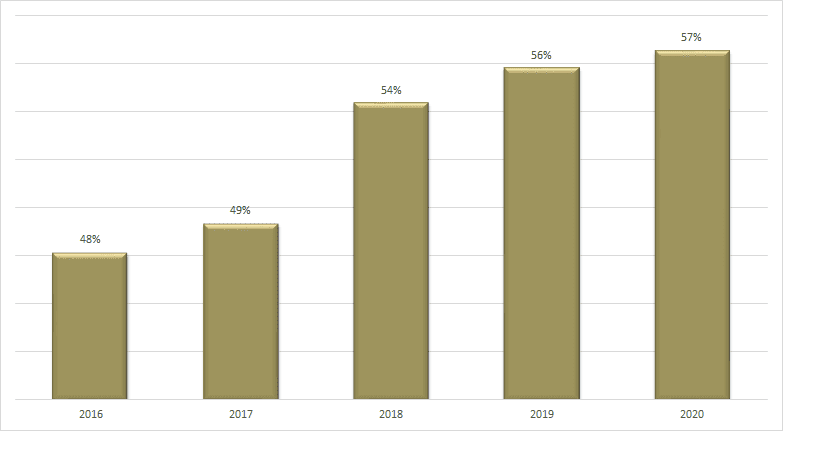
First-Year to Sophomore Retention Rate
The retention rate measures the first-time-in-college (FTIC) first-year student cohort as they progress into their second year. The following data is reported to IPEDS every year. Below are the five most recent cohorts.
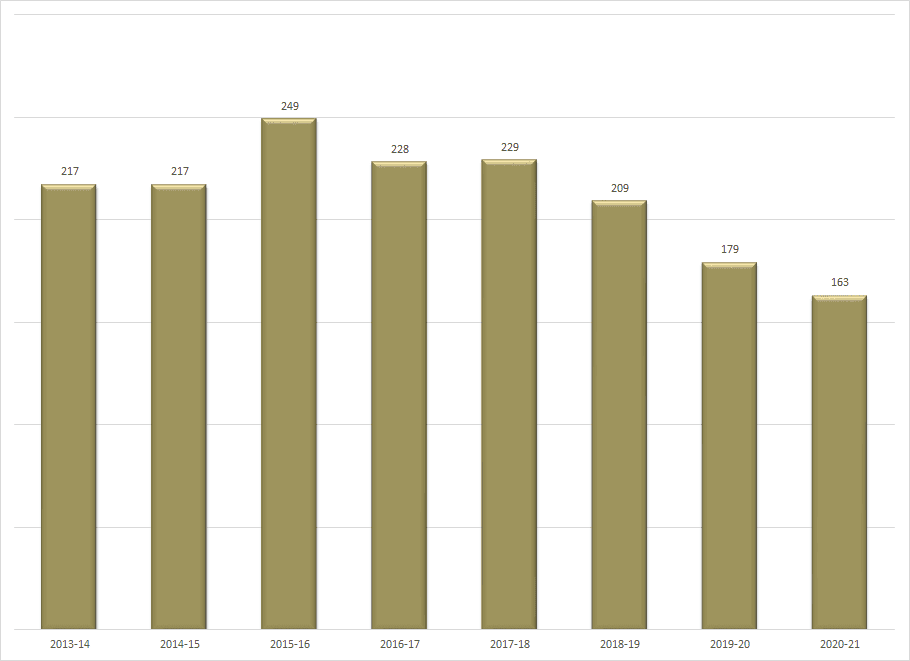
Degrees Conferred
Degrees awarded follows the academic year (July 1 through June 30). This data is reported to IPEDS annually.
Graduation Rates
Graduation rate follows entering first-time-in-college (FTIC) as a cohort through to graduation. Ferrum College utilizes the 6-year graduation rate (150%).
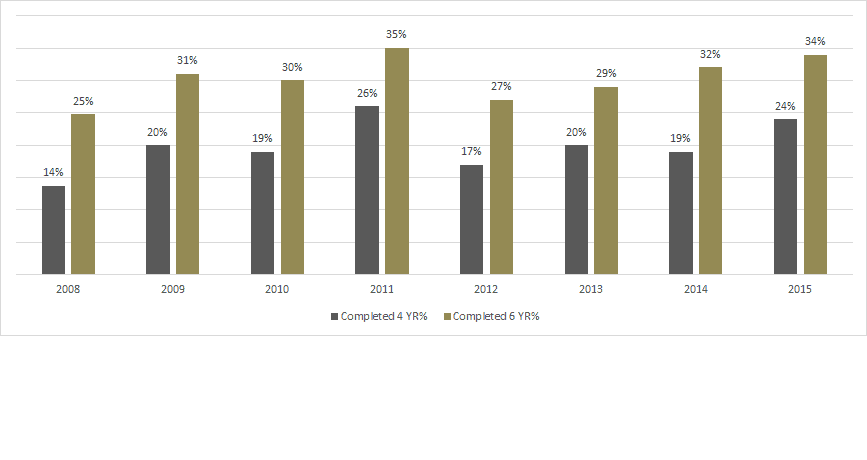
Ferrum College currently holds a 6-year (150%) graduation rate of 34%. The institution will strive to create a 3-year graduation rate average of 35% starting with the 2014 entering cohort through the 2016 cohort. This average of the three-cohort graduation rate would net the institution a 6% graduation rate increase.
Ferrum College currently holds a fall to spring first-year student retention rate of 54%. The institution will strive to create a 3-year average of 60% starting with the entering first-year students of fall 2020 through spring 2023. This average of the three-cohort retention percentage would net the institution a 6% rate increase.
Further disaggregated data is provided in the Student Outcomes Report, which is updated annually.
Employment, Graduate and Professional Education
Career and Job Placement Services
Post-Graduation Employment, Graduate & Professional Education
According to the HB 886 House Bill of Virginia, Ferrum College must provide student-specific information regarding graduate school and employment status. The link below contains such information:
Graduation Rates for Student Athletes (via NCAA Graduate Rate Survey)
Intercollegiate Athletic Program Participation Rates and Financial Support Data (Equity in Athletics Disclosure Act)—this report is completed in the spring term of the academic year, and the webpage is updated by the following fall term.
Drug and Alcohol Abuse Prevention
Vaccination Policies
COVID-19 Information
Fire Safety Policies, Fire Statistics and Fire Log (On-Campus Housing Facilities)
Emergency Procedures
The Master of Science in Clinical and Counseling Psychology program at Ferrum College is designed to generally prepare graduates for clinical licensure as a Licensed Professional Counselor (LPC) or a Licensed Psychological Associate/Practitioner (LPA/LPP). The program requires 60 credit hours, aligning with the typical requirements for licensure in both professions across many states.
It is crucial to note that while our program is structured to meet the academic requirements for both license types, the ultimate determination of licensure eligibility lies with each state’s licensing board. Ferrum College cannot guarantee licensure, as licensure is subject to the policies and regulations set forth by individual state licensing boards.
Ferrum College holds regional accreditation from the Southern Association of Colleges and Schools Commission on Colleges (SACSCOC). However, as a new MS in Clinical and Counseling Psychology program, it has not yet applied for accreditation through the Council for Accreditation of Counseling and Related Educational Programs (CACREP), the American Psychological Association (APA), or the Masters in Psychology and Counseling Accreditation Council (MPCAC). The program intends to pursue accreditation with one or more of these bodies in the future, but the College cannot guarantee the outcome of the respective accreditation processes.
Prospective students are advised to research and understand the licensure requirements of the state in which they intend to practice. Ferrum College encourages students to contact their state licensing board for the most current and specific information regarding licensure eligibility. We are available to help prospective students locate licensure information for their state and preferred licensure type.
For further inquiries regarding the Ferrum College Master of Science in Clinical and Counseling Psychology program, please contact the Program Director, Dr. Ryan Cooper (rrcooper@ferrum.edu) or Program Assistant, Jennifer Whitlow (jwhitlow@ferrum.edu).
The Ferrum College Master of Science in Clinical and Counseling Psychology has been designed to meet the Virginia requirements for LPC licensure; however, until our first cohort completes their degree and applies to the board, we cannot guarantee licensure results.
Virginia mandates candidates to “complete 60 graduate semester hours” through a master’s degree that offers “a sequence of academic study with the expressed intent to prepare counselors as documented by the institution” (which our program fulfills). Additionally, the program must have “identifiable counselor training faculty and an identifiable body of students who complete that sequence of academic study” (both of which our program possesses). Finally, the “academic unit must have clear authority and primary responsibility for the core and specialty areas” (which our program holds). While CACREP programs are presumed to meet these criteria, non-CACREP programs that are regionally accredited (we are) should meet these requirements as well.
We have proactively engaged the Virginia Board of Counseling and communicated that we are admitting students starting in Fall of 2024. The Board advised the College to maintain an/one LPC faculty (not a strictly psychological faculty) and suggested (but did not require) the College have at least three LPCs on faculty. Currently, the faculty team includes three (3) Licensed Professional Counselors and (3) Licensed Psychologists.
Virginians and/or those who plan to practice in Virginia should also be aware of coursework requirements (listed per 18VAC115-20-51), which include: professional counseling identity, function, and ethics; theories of counseling and psychotherapy; counseling and psychotherapy techniques; human growth and development; group counseling and psychotherapy theories and techniques; career counseling and development theories and techniques; appraisal, evaluation, and diagnostic procedures; abnormal behavior and psychopathology; multicultural counseling theories and techniques; research; diagnosis and treatment of addictive disorders; marriage and family systems theory; and a supervised internship of 600 hours, of which 240 hours of face-to-face client contact is required.
Prospective students are encouraged to review the Virginia Board of Counseling’s regulations closely.