Why Study Environmental Science at Ferrum College?
As one of the oldest in the nation, the environmental science program offers a modern introduction to the environmental sciences. The challenging background enables students to deal with important environmental issues of the 21st century.
Beyond the Classroom
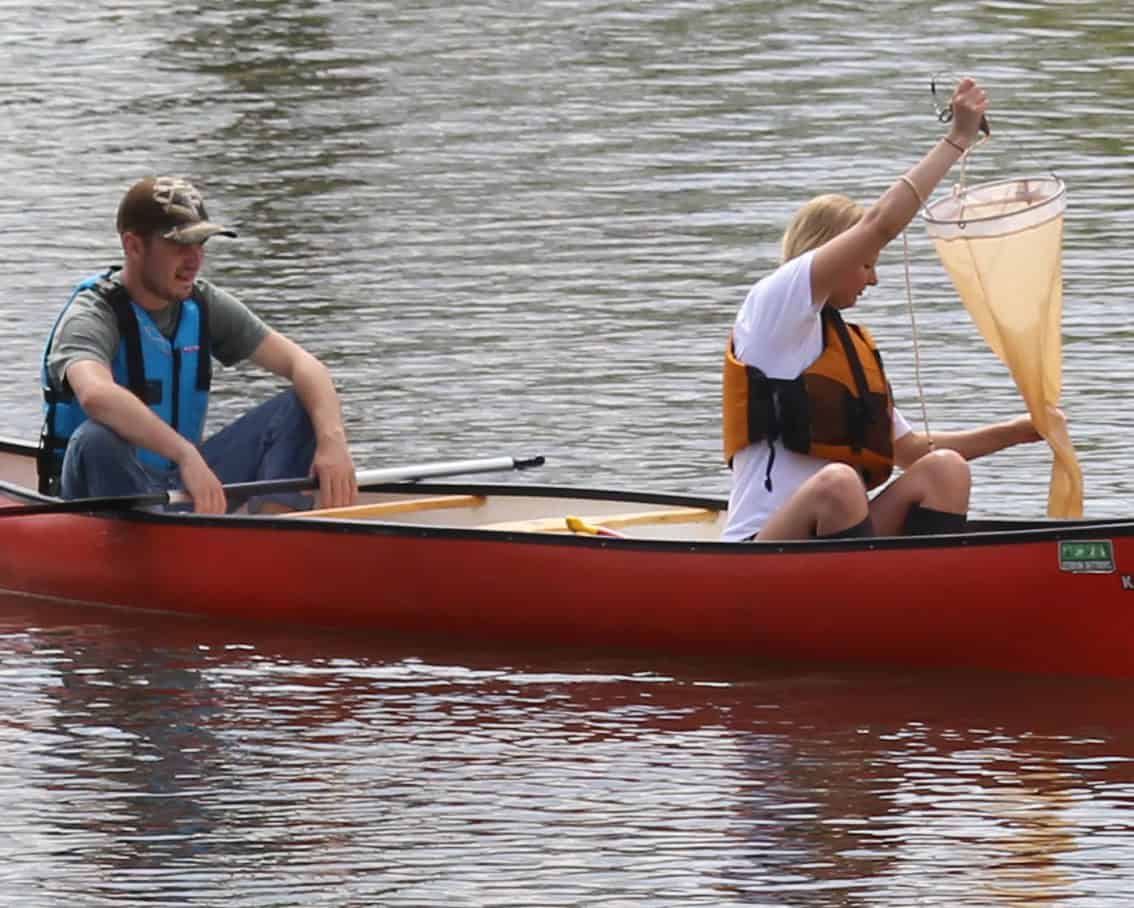
Students have the opportunity to work as technicians during the summer for the Smith Mountain Lake Water Quality Program, a collaborative initiative launched in 1987 by Ferrum College scientists and the Smith Mountain Lake Association (SMLA). The program aims to protect the lake’s water quality, encourage community participation, and provide valuable data to stakeholders. Data collected in this program is reported to DEQ. Through this experience, students gain hands-on training in field and laboratory techniques used in water quality monitoring. They also build communication skills by working with citizen volunteers and delivering presentations.
Students sample the benthic macroinvertebrate community in two local rivers, Storey Creek and Pigg River, twice a year as part of Virginia Save Our Streams Water Quality Monitoring. This is a citizen science program. The data allows our community to measure the health of the local water bodies, and it is also used by the DEQ to monitor the health status of streams that they are unable to sample. We have been monitoring the Storey Creek site for over a decade.
Environmental Science Sample Courses
You will take a core of environmental science courses, including Introduction to Plant Science, Nonvascular Plants and Fungi, Organic Chemistry, and Natural Resource Management.
VERTEBRATE ZOOLOGY
An introductory survey of the evolutionary relationships, anatomy, physiology, histology, and development of vertebrate animals.
FUNDAMENTALS OF ECOLOGY
An introductory study of the interrelationship of organisms with the abiotic and biotic components of their environment. Includes a basic introduction to population dynamics.
NATURAL RESOURCE POLICY AND ECONOMICS
Introduction to natural resource policies and economics, including legal frameworks, impact analyses, and valuation methodologies.
Careers in Environmental Science
Natural Resource Manager
Natural resource managers are charged with protecting the wildlife, plants, water, and soil of an area. These professionals may be in charge of a conservatory, national or state park, or historic site, or they may work within a specific region or state.
Environmental Scientist
Environmental scientists use their knowledge of the natural sciences to protect the environment. Environmental scientists and specialists use their knowledge of the natural sciences to protect the environment and human health. They may clean up polluted areas, advise policymakers, or work with industry to reduce waste.
Wildlife Forensic Specialist
Wildlife forensic specialists may collect evidence from wildlife inspectors and fish and game wardens, and work with them to investigate and prosecute crimes.
Ferrum College Catalog
View the catalog for all program courses and degree requirements.