
SMLA President John Rupnik presents the Melvin Johnson Award to Dr. Bob Pohlad.
10/22/2021
During their monthly meeting on Tuesday, October 19, the Smith Mountain Lake Association (SMLA) bestowed the 2021 Melvin S. Johnston Citizen Volunteer Award upon Ferrum College Professor Emeritus Bob Pohlad.
The annual award, named for philanthropist and SMLA founder Melvin Johnston, is given to those who have had a great impact on the Smith Mountain Lake area during the year, or over an extended period of time. SMLA board member Lori Smith, who also served as SMLA president from 2017-19, was Pohlad’s counterpart in receiving the award.
Pohlad has served as senior scientist for the Water Quality Program (WQP) on Smith Mountain Lake, which was founded 35 years ago by Pohlad’s late wife, Dr. Carolyn Thomas, and Dr. Dave Johnson. Both Thomas and Johnson taught at Ferrum College with Pohlad.
“I am very honored to be given this award by the SMLA, and to be a part of the Smith Mountain Lake Water Quality Program and the Master Naturalist Program,” said Pohlad. “These programs help people engage in citizen science that enhances everyone’s knowledge of our valuable local resources to benefit us all.”
In his role as senior scientist, Pohlad coordinated the recent development and implementation of SMLA’s new algae reporting tool, which has since been integrated into the Virginia Department of Health reporting system.
Pohlad also helps to train volunteers of the Blue Ridge Foothills and Lakes chapter of the Virginia Master Naturalists. These volunteers take on active projects at Smith Mountain Lake, such as monitoring waters and streams, invasive species control, and buffer landscaping. Pohlad designed curriculum for training and taught classes both in person and over Zoom during the COVID-19 public health crisis.
“The awards committee and the SMLA Board felt strongly that Dr. Pohlad’s long record of service to the WQP was due appropriate recognition, as was his service in preparing so many citizen scientists over the years,” said SMLA board member Geoffrey Orth, who also serves as the coordinator for Save our Streams. “He is truly, as the citation of the award indicates, the institutional memory of the WQP and a go-to person for some of our knottiest problems. It is hard to imagine how the WQP and its volunteer base would have reached its current level of expertise without him.”
Learn more in these articles by The Franklin News-Post and The Laker Weekly.
Learn more about Ferrum College’s role in the Water Quality Program.
7/2/2021

Dr. Vanden Eykel visited Rome for research in 2019.
Associate Professor of Religion Eric Vanden Eykel has been appointed the Forrest S. Williams Teaching Chair in Humanities at Ferrum College. This endowed teaching chair designation is given to a tenured faculty member who has demonstrated excellence in teaching and scholarly work, and who is committed to scholarly research within the Humanities.
“I was thrilled to receive news of this appointment, and it’s a real honor to be recognized in this way for my scholarship and teaching,” said Vanden Eykel. His appointment letter describes him as generous and supportive of Ferrum College students and his colleagues.
The Williams Teaching Chair is a two-year appointment with the possibility of extension for another one- or two-year term. While serving, Vanden Eykel will conduct research to support two book projects, one which he is authoring himself about the Magi in the Gospel of Matthew, and another that he is co-editing with a colleague from Wingate University, Dr. Christy Cobb, which encompasses a collection of essays on sexual violence in early Christian literature. His research will also include travel during his upcoming 2022 spring sabbatical, but those details are not final yet.
“I’m hoping to take a few trips and explore opportunities for integrating travel components into some of my courses at Ferrum,” he explained.
“Dr. Vanden Eykel is one of our dynamic and engaging faculty members, and his nomination for the Williams Teaching Chair highlights his accomplishments and brings honor to Ferrum College,” said Dean of Arts & Sciences and Professor of Chemistry & Physics Jason Powell, who nominated Vanden Eykel for the position. “He was recently named a general editor for the Journal for Interdisciplinary Biblical Studies (JIBS), and I am particularly excited about the book he is writing about the Magi described in the book of Matthew. Look for him to lead an upcoming trip to Rome for members of the Ferrum College community, as well!”
Learn more about Vanden Eykel’s editing position for JIBS.
Learn more about Ferrum College’s Religious Studies program.
5/10/2021
 Associate Professor of Religion Eric Vanden Eykel has been named a general editor to the Journal for Interdisciplinary Biblical Studies (JIBS).
According to the JIBS’ website, the journal “is a peer-reviewed, open access journal [meaning that it can be read at no cost] dedicated to publishing cutting edge articles that embody interdisciplinary, social justice-oriented, feminist, queer, and innovative biblical scholarship.” JIBS “welcome[s] submissions that challenge canonical and/or disciplinary norms and boundaries or that query the field of biblical studies’ relationship to the broader investigation of human religion, culture, and literature.”
Vanden Eykel’s editorship means he will receive article submissions for the journal and search out other scholars in the field who will read the articles and make suggestions to the authors about how to improve their argument. Although his primary interest falls with articles on early Christian literature, Vanden Eykel will be reviewing all submission genres.
“My job as an editor is to help guide and oversee this process, and then to get approved articles ready for publication by helping with copy editing and formatting,” explained Vanden Eykel. In short, he and the other JIBS editors will have a part in just about every step of the publication process.
“I’m really excited to work with this particular journal,” said Vanden Eykel. “The ‘traditional’ questions that many of the journals in our field focus on are certainly valuable, but they often leave a really important question unanswered: ‘Why should any of this matter?’ One of the aims of JIBS, at least from my perspective, is to help readers explore various ways of answering that question.”
JIBS is based in the United Kingdom’s Sheffield Institute for Interdisciplinary Biblical Studies at the University of Sheffield. It publishes two issues every year. Learn more about JIBS here.
Click here to learn more about Ferrum College’s major or minor in religious studies.

Dr. Richard Smith
On February 24, 2021, the Ferrum College community bid a last farewell to Professor of History and Williams Distinguished Teaching Professor in the Humanities Richard Lee Smith. He was a beloved husband, father, grandfather, and brother; a teacher and storyteller; an internationally recognized top scholar; an author; and a warm-hearted and generous member of the community. Smith was 75 years old.

Smith rides atop a camel in the Taklamakan Desert.
Born on August 26, 1945 in Montgomery, WV, Smith spent his childhood in Cranford, NJ playing football and getting into things with his friends. He later moved to Moravia, NY where he worked on his family’s dairy farm during summers and attended college courses at SUNY-Cortland. He earned his bachelor’s degree in history in 1967 and then enrolled at Rutgers University where he received his master’s degree in 1969 and his Ph.D. in 1972, both in history.
After teaching for four years at LaGrange College in LaGrange, GA, Smith arrived at Ferrum College in 1976, where he would spend the next 42 years teaching history. As a college professor, Smith taught more than 8,000 students, over 7,000 of them at Ferrum College.
“Richard never waited until some other time to live life to its fullness. As was evident in the display of photographs at his retirement celebration in 2018, Richard leaned into life always,” wrote Ferrum College President David Johns in a recent email announcing Smith’s passing to the campus community.
“That his first students at Ferrum grew to be among his best friends is a testament to the impact he had on generations of Ferrum students,” said Professor of History Timothy Daniels, who was a colleague and personal friend of Smith’s.
He enjoyed teaching ancient Asian and African courses, including Chinese, Indian, Southeast Asian, North African, and sub-Saharan history, along with traditional Western European and American subjects. He was known to be a great storyteller who enthralled listeners with tales of his travels to the Sahara Desert, Timbuktu, Kenya, Egypt, Peru, and more. Some of these trips included his students who arrived home with hilarious stories and fond memories, including a rafting trip down the Tambopata River that ended in a crash and fire ant attack at their rainforest camp.

Smith performs in the Ferrum College drama production, “Too Free for Me” in 1998.
Smith authored three books, which earned him international recognition as a top scholar in ancient and medieval trade and commerce. At the time of his death, he was tirelessly working on a fourth book, a thematic study of trade and commerce in the ancient and medieval worlds.
“When Richard went into the hospital for some issues not directly related to his final medical problems, I told [his wife] Kathleen to relay to him that he’d better hurry up and get out of the hospital if he wanted to make progress on his book (which was four out of seven massive chapters done by the time of his death),” remembered Daniels. “She sent me a picture of him grinning in his hospital gown, in his hospital bed, with books and yellow legal pads splayed across his lap. Only death – not any illness – was going to get in the way of his scholarship.”
He appeared on Blue Ridge Public Television’s “Public Eye” program in the 1970s and 1980s, two PBS documentaries, and the television show “Digging for the Truth” with Josh Bernstein on the Discovery Channel. He also served as consultant for several History Channel shows.
Smith enjoyed performing for Ferrum College’s drama department and appeared in numerous plays including “Too Free For Me,” “Lil Abner,” “Fiddler on the Roof,” and more.

During a 2015 trip to Egypt.
He and his wife made their retirement home at Smith Mountain Lake in Wirtz, VA. There, he thoroughly enjoyed the water, captaining the boat that pulled his grandchildren across the lake during countless hours of tubing. He was a beer connoisseur and loved to grill, sharing his famous ribs and pulled pork platters with family and friends. Along with his limitless quest for knowledge, he loved music, organic gardening, and storytelling.
Once asked what he loved about Ferrum College, Smith responded, “Ferrum is special because it is a place where, as a teacher, I could help students maximize their potential if they were willing to work hard and dedicate themselves to achieving academic success. I am especially proud to see that so many of my former students have gone on to enjoy success in their chosen careers in business, public service, education, and a variety of other fields.”
“Some lives are so large, rich, and full, they spill over into the lives of others,” wrote Johns. “And not just an experience or a memory, but part of the energy and essence of that person becomes lodged inside those in his or her orbit. This was Richard, and there are many who carry within them part of the overflow of his extraordinary life.”
Smith is survived by his wife and soulmate Kathleen; sons Erik and Howard; step-children Kevin and Beth; and their families. Please share online condolences with the family here.
The family requests that memorial contributions be made to the Richard L. Smith Academic Enrichment Scholarship in History at Ferrum College.
 The Synergistic Classroom: Interdisciplinary Teaching in the Small College Setting was published in October 2020. The book of essays written by higher education professionals includes two chapters by Ferrum College professors, one about the Appalachian Cluster program for first-year students and one about the College’s multidisciplinary, team-taught honors seminars.
“Arts in the Laboratory: A Multidisciplinary Approach to Honors Education in a Small College Setting” was written by Professor of Psychology Sharon Stein and Professor of English & Director of the Boone Honors Program Lana Whited. Their seminar, Media and Violence*, explores depictions of violence in news and entertainment media, social scientists’ methods of studying the effects on society, and ways to address problems associated with media and violence.
“Experiential Learning in the Rural, Small College Setting: Creating an ‘Appalachian Cluster'” was written by Professor Emeritus of English Peter Crow; Professor of Environmental Science Delia Heck; Professor of English Tina Hanlon; Assistant Professor of Sociology Susan Mead; and Professor Emerita of Environmental Science and Biology Carolyn Thomas, who passed away in January 2020. Since 1999 they have all taught in the Appalachian Cluster, a learning community in which first-year students study modernization in Appalachia through interlinked courses in sociology, environmental science, and English.
Editors Corey Campion and Aaron Angello of Hood College designed The Synergistic Classroom to demonstrate innovations that expand the traditional boundaries of discipline-specific programs within the particular circumstances at small colleges. Blending disciplines within the curriculum can boost students’ engagement while preparing them for the kinds of critical thinking and teamwork required in the workplace.
Hanlon commented that “interdisciplinary collaboration has been the most rewarding part of my career at Ferrum since I first began team-teaching with Carolyn Thomas in the 1990s. I believe the Appalachian Cluster’s blend of introductory coursework and experiential learning while visiting communities in coal county now aligns well with President David Johns’ vision for enhancing the college’s work and outreach in our Blue Ridge environment.”
The Synergistic Classroom is available from Amazon and other booksellers, or visit Ferrum College’s library to check out a copy.
Learn more about Ferrum College’s efforts to provide interdisciplinary learning by following its Appalachian Cluster program on Facebook.
*The Ferrum College course catalog describes the Media and Violence course as “an interdisciplinary, team-taught, writing intensive study of the relationship between media and violence. The emphasis of the course will be on how violence is depicted in news and entertainment media, how media depictions of violence affect society, how social scientists study these effects, and how the problems associated with media and violence might be addressed.”
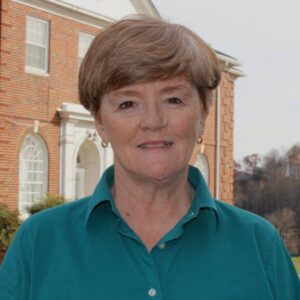
FERRUM, VA, December 8, 2020—English professor Lana Whited’s latest book began over 35 years ago, with a search for a book in a Greensboro bookstore. In 1984, as a doctoral student at the University of North Carolina at Greensboro, Whited went looking for Truman Capote’s “In Cold Blood: A True Account of a Multiple Murder and its Consequences.” She came up empty-handed after visiting the crime and nonfiction sections.
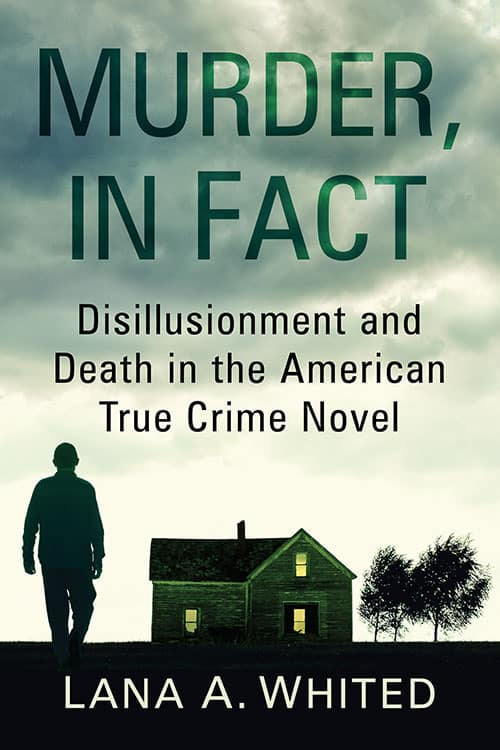
Puzzled to eventually find the true crime book in the fiction section, Whited began a decades-long study of murder narratives, attempting to define a literary species within mainstream American literature. Her research extended beyond the writing of her Ph.D. dissertation at University of North Carolina at Greensboro, which was completed in 1993. The current result of her investigation is “Murder, In Fact: Disillusionment and Death in the American True Crime Novel,” released in November 2020 and now available from most booksellers.
Whited’s study turned into an examination of literary Naturalism, which she says involves “the application of deterministic principles to literary works.” Whereas newspaper reporters covering violent crime strive for objectivity, the Naturalists depict their protagonists in a more subjective way and in a manner that suggests a lack of free agency in their lives; what these characters do is generally a reaction to their environment. Themes in Naturalistic writing include violence, pessimism, and pitting social environments against one another. For example, those who had rough childhoods would inevitably inflict pain on higher class residents with a predictable result of jail time or worse.
“A journalist writing about a murder case or trial is relaying information that the reader can process and shape into a theory of the crime,” explained Whited. “The authors of the novels in my study shape the material to offer their own theory, presenting the reader with an argument about why the crime occurred. Reporting is objective; Naturalism is subjective.”
Whited says she connects novels written from the 1890s to the present with Naturalism based on three characteristics: “the authors’ use of reporting skills borrowed from journalism, and, in many cases, from work as journalists early in their careers; the authors’ focus on the murderer, not the victim as a protagonist, attempting to account for his psychopathology (this is where Naturalism enters in); and the authors’ writing about crimes having basis in fact.”
Whited loves the book’s cover design. “That is an aspect of the publishing process over which authors have almost zero control,” she said.
She is relieved to finally hold the book that took 35 years to write, but she also has “a sense of a lost limb or not seeing an old friend anymore,” she explained. Her work was not without trials. “At certain points, I have had to put the project aside for periods of time because the material became too traumatic. I have had nightmares about Capote’s book in particular. When the nightmares increased, I knew it was time to back off or focus differently. But I don’t think I will ever have true crime fatigue.”
Learn more about Whited’s book at McFarland Books, here.
Or use your Amazon Smile account to purchase her book while supporting Ferrum College. Learn more here.

In fall 2019, Litton received the Distinguished Member award from Nimrod Hall Hunt Club, of which he had been a member for years. In this photo, he stands proudly with his sons Jason (on Litton’s right) and Sean (on his left). John Payne photo.
On June 6, 2020, at the age of 80, former Ferrum College Professor of Biology Sam Litton passed away.
Litton played high school football at Andrew Lewis High School and then enrolled in Elon College where he earned his bachelors degree. He then enlisted in the U.S. Navy as a corpsman and completed a tour in Vietnam as a medic while serving in the Marines. After discharging from the military, Litton earned his Master of Science in biology from Appalachian State University, and then received his doctorate from the University of Virginia. He married Joan in 1972 and began teaching biology at Ferrum College shortly afterward.
Litton, Joan, and their sons Sean and Jason, spent much of their time traveling all over the United States and Canada. They took students on field trips as near as the Virginia mountains, and as far as the Virgin Islands.

“He was hunting in this photo, yes. But he was also teaching,” said John Payne, Litton’s former mentee. “He never stopped teaching.”
John Payne photo.
Litton’s friends and colleagues remember him as a professor who created real bonds with his students. “Sam was gifted at connecting with his students. He took them under his wing and mentored them, not just with academics, but with non-academic issues, also,” said former Ferrum College Professor of Biology Ron Stephens. “To describe him as a ‘father-figure’ isn’t enough. He served as a true friend they could trust.”
Litton freely gave his knowledge and time. In 1979, a Ferrum College student wanted to set up a volunteer firefighting organization at the College. Litton worked with the Forest Service and Virginia Department of Forestry to make the student’s vision come true, and more than 50 Ferrum students were trained. That summer, the Ferrum College organization earned outstanding performance ratings when they helped suppress the 6,000 acre Otay Fire in southern California.
He was an avid hunter and outdoorsman. “I always respected and admired his love and knowledge of all things in nature,” said retired Professor of Biology and Horticulture Bob Pohlad. “Sam got the students outside a lot. He enjoyed working with them and helped so many of the students that could relate to his wildlife interests.”
“He particularly liked quail hunting and always had a bird dog or two. We knew every quail covey in the Ferrum area,” remembered Stephens, who used to hunt with Litton.
During his time at Ferrum College, Litton served as president of both the Ferrum Lions Club and the Rocky Mount Rotary Club. After retiring, Litton and Joan moved to Smith Mountain Lake where they entered the real estate business. Litton continued to find daily joy in teaching and learning.
“I am absolutely blessed that my path crossed with Sam’s,” said Litton’s former mentee John Payne, a 1985 Ferrum College graduate. “He was my advisor then and had a real effect on my life. We were friends for close to 40 years. He was truly a passionate teacher. He was the epitome of ‘Not Self, But Others’.”
Read Litton’s obituary here.
***
Litton is survived by his wife of 48 years Joan, and his sons Sean and Jason. The family has requested that memorials be made to Saint Peter’s Episcopal Church, 65 Rock Ridge Road, Callaway, VA 24067; to Ferrum College, 215 Ferrum Mountain Road, Ferrum, VA 24088; or to Southern Virginia Child Advocacy Center, 300 South Main Street, Rocky Mount, VA 24151.
Classes ended for summer break in May, but Ferrum College’s faculty continued to learn and educate throughout the summer months with trips to Italy, Spain, Sweden, Austria, and Brazil.

Dr. Eric Vanden Eykel
Assistant Professor of Religion Eric Vanden Eykel spent nearly a week in Rome from June 29 through July 5. During his self-described “incredibly short and fast-paced trip,” he attended the Society of Biblical Literature’s annual international meeting, which gives scholars around the world a chance to connect with one another to learn about current trends in biblical studies. Vanden Eykel was also able to visit other landmarks including Ostia Antica, the port city of ancient Rome, and Pompeii, one of the cities buried by the eruption of Mount Vesuvius in 79 B.C.
Vanden Eykel described his time in Italy as “like stepping in and out of time capsules. One minute you’re walking down a crowded street, and the next, you’re standing in a building nearly 2,000 years old. It is a city of layers, and a fantastic opportunity to experience the past.” See photos from Vanden Eykel’s trip here.

Dr. Patty Suppes
Associate Professor of Spanish Patty Suppes received a faculty development grant to present her papers at two July conferences in Valencia, Spain: “Leyenda, tradición, y violencia en El león dormido de Marian Izaguirre” at the Congresos Internacionales de Literatura Hispánica, and “Rosario Ferré y su ‘Cocina de la escritura’: Una alternativa al canon como modelo de composición” at the Asociación de Estudios de Género y Sexualidades. Between conferences, Suppes was also able to visit family and friends with her son who accompanied her on her trip. She was also excited to run into Taiki Sawabe and his wife Mizuho at the Barcelona airport; the couple previously spent two years at Ferrum College with the Japanese Outreach Initiative program.
“I’m so grateful for the faculty development grant that allowed me to participate in two conferences in Valencia, Spain, and I’m glad that I was able to do some site visits in between the conferences,” said Suppes. “The opportunities for students to study and intern abroad are tremendous, and I can’t wait to meet with faculty in various majors to talk about how to help students participate.” See photos from Suppes’ trip here.

Gregory Rock (second from left)
Gregory Rock, Ferrum College’s Iron Mountain Brass director and adjunct music faculty member, traveled to Salzburg, Austria in late July 2019 to take part in the Salzburg Music Festival. Rock played the sackbut or Baroque Posaune – a trombone from the Renaissance and Baroque eras – in a collaborative project with players from UNC Chapel Hill; University of the Arts of Bremen, Germany; Schola Cantorum of Basel, Switzerland; and Mozarteum University of Salzburg, Austria. The group provided music for Catholic Mass at the Salzburg Cathedral on Sunday morning, July 28.
Although most of the musicians had not played together before, Rock was struck by music’s common language: “There were many languages spoken among the musicians from German to Austrian, to even Russian and French as well as English. The language of music prevailed and we were able to put together a substantial music project in just a very short time.” See photos from Rock’s trip here.
Read more about the Salzburg Music Festival here.

Dr. Tina Hanlon
Professor of English Tina Hanlon spent 24 days in four Nordic countries: Sweden, Norway, Finland, and Estonia. During the biennial Congress of the International Research Society for Children’s Literature held in Stockholm, Sweden in August, Hanlon presented her paper, “Female Voice, Power, and Agency in the Appalachian Folktale ‘Whitebear Whittington’ and its International Antecedents.” Four other speakers from different countries presented along with Hanlon; “We had no contact in advance but our papers fit together very well and all dealt with images of women in different fairy tale traditions,” she explained.
Hanlon also participated in additional conference activities including receptions, tours, a mentoring lunch spent with a young Hungarian woman, and a big buffet in the Golden Hall of Stockholm City Hall where the Nobel Prize banquet is held annually in December. “[I was] excited to learn more about the folklore and literature of Scandinavia and share new insights in my E-Term course on World Folktales and Literature. I feel very lucky to have [had] this opportunity to meet with colleagues from all over the world at the IRSCL Congress,” she said. See photos from Hanlon’s trip here.

Rio de Janeiro. Photo by Dr. Chris Mayer.
Chris Mayer, associate professor of recreation leadership, traveled to Rio de Janeiro, Brazil in May, to give four presentations at the International Conference on Interpretation on his book, You Can Do It! Your guide for developing non-personal interpretive products in Brazilian protected areas. Mayer’s book, co-authored with Ryan Finchum and Lorena Brewster, was written to help protected area managers plan and create interpretive products that contribute to public support for the conservation of biodiversity in conjunction with the Partnership to Conserve Biodiversity in the Amazon. He explained the conference’s theme of “Acting Locally, Connecting Globally,” gave attendees the opportunity to link their efforts across professional boundaries, international borders, and cultural differences.
“The International Conference welcomed interpreters from around the world to share ideas and inspiration and discuss the latest global trends in this important field,” said Mayer. “It was the most impressive conference I ever attended because of the open exchange of ideas and experiences among the multi-national attendees.” See photos from Mayer’s trip here.
Learn more about the International Conference on Interpretation here.

Dr. Tina Hanlon (far right) with the Appalachian Cluster 2016 field trip to Saltville, St. Paul, Dante, Pound, and Wise, VA as well as Lynch, KY.
Tina Hanlon, Ferrum College professor of English, has been selected as the post-secondary educator for the 2018 Stephen L. Fisher Excellence in Teaching Award. She will be recognized during the 41st annual Appalachian Studies Association (ASA) conference in Cincinnati, Ohio on April 6, 2018.
According to the ASA website, the Stephen L. Fisher Award for Excellence in Teaching* honors individuals dedicated to intellectual rigor and pedagogical integrity in constructing and delivering inclusive knowledge about Appalachia and its people. Selection of the award winners was made by the ASA Education Committee, who reviewed the pool of nominated candidates.
Hanlon has been teaching British and American literature at Ferrum College since 1992 and focuses on world folktales and writings for children and adolescents. Her courses also include professional writing, composition, and linguistics. She received her B. A. in English from Gettysburg College and both her M. A. and Ph.D. in English from Ohio State University.
Hanlon created Ferrum’s Appalachian Literature course and is one of three Ferrum College professors who teach the Appalachian Cluster, a unique learning community that examines modernization in Appalachia through a group of courses in English, sociology, and environmental science. Her faculty profile is at www.ferrum.edu/artsandhumanities/faculty/tina-hanlon/.
*The award was established in 2013 by the ASA Education Committee chaired by Carol Baugh. In 2015, the award was named in honor of Stephen L. Fisher, professor of political science from 1971 to 2006 at Emory & Henry College, where he helped create an Appalachian studies minor, the Appalachian Center for Community Service, and an inter-disciplinary service-learning major in Public Policy & Community Service. Fisher was the 1999 Carnegie Foundation Outstanding Baccalaureate College U.S. Professor of the Year and won numerous additional teaching awards.