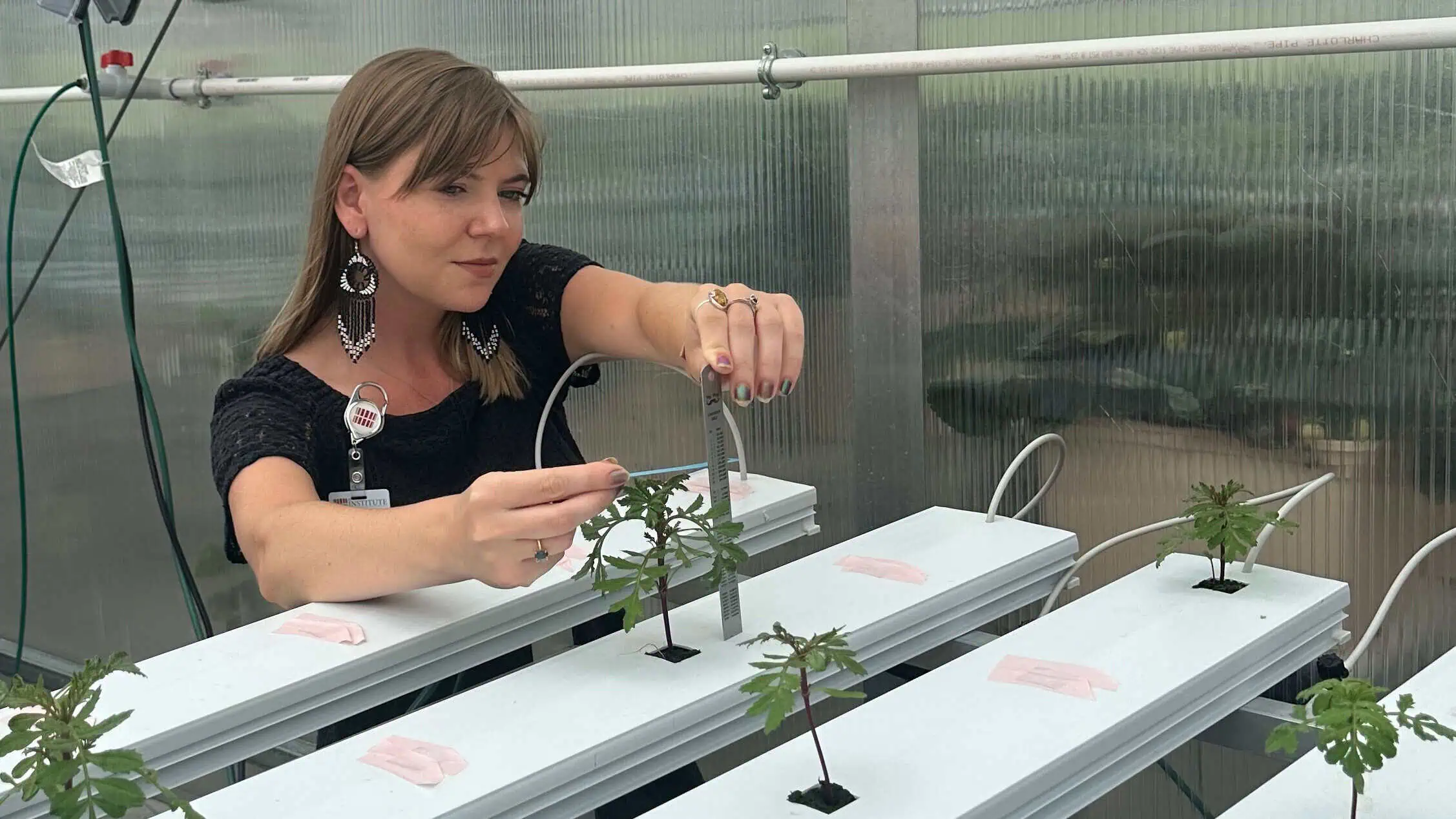
Ferrum, VA, July 7, 2026 — From greenhouse research on campus to advanced agricultural innovation at a regional research institute, Ferrum College senior Maranda “Gracie” Edwards is cultivating a future rooted in science, sustainability, and a lifelong passion for plants. Her achievements exemplify the experiential learning opportunities that define Ferrum College’s Agricultural Science program.
Edwards, a senior agricultural science major with a horticulture emphasis from Martinsville, Virginia, has paired academic excellence with extensive hands-on research, maintaining a 4.0 GPA while preparing for graduate study and a career in agricultural innovation.

This summer, Edwards is expanding that experience in two ways. At Ferrum College, she is helping continue a 40-year tradition of environmental stewardship as part of Ferrum College’s Smith Mountain Lake Water Quality Monitoring Program. Through hands-on fieldwork, she’s helping monitor and protect one of Virginia’s most treasured natural resources. Her specialty is algae analysis, examining water samples under a microscope to identify and count different algae species before recording the data used to monitor the lake’s ecological health.
She is also serving as an AgTech intern at Virginia Tech’s Institute for Advanced Learning and Research (IALR), supporting hydroponic production, plant research, and greenhouse operations at the CEA Innovation Center. In addition to managing nutrient solutions, collecting plant data, and monitoring crop health, Edwards is contributing to a study evaluating hydroponic production methods for edible signet marigolds. The research compares three cultivars grown at different fertilizer rates to identify best practices for maximizing flowering, growth, and overall quality, and to provide practical guidance for commercial greenhouse growers.
“Students like Gracie demonstrate what makes a Ferrum College education distinctive,” said President Mirta M. Martin. “Through meaningful faculty mentorship and experiential learning, she has transformed classroom knowledge into research that advances agriculture and environmental stewardship. We are proud to see her represent Ferrum College through this prestigious internship as she prepares for graduate study.”
Edwards credits Ferrum College’s emphasis on experiential learning with helping shape her future.
“Ferrum College has been an incredible place to learn, grow, and build the foundation for my future,” Edwards said. “I’ve loved being part of a campus where the faculty truly invest in their students and where hands-on learning is part of everyday life.”
Her coursework has directly supported research in hydroponic production, nutrient management, cultivar trials, and greenhouse studies.
“Working in controlled-environment agriculture right here on campus has strengthened my passion for innovative plant systems and given me real-world experience that I know will shape my career,” she said.
Studying close to her hometown has made the experience even more meaningful.
“Growing up in Martinsville, I’ve always felt rooted in this region, and studying so close to home has allowed me to stay connected to the community that shaped me,” Edwards said. “Ferrum’s campus feels familiar, supportive, and welcoming. My time here has been transformative, and I’m grateful for the people, opportunities, and place that have made Ferrum College feel like home.”
After graduating this fall, Edwards plans to pursue a master’s degree in horticulture at Virginia Tech. She ultimately hopes to open her own “Purple Farm,” specializing in anthocyanin-rich fruits and vegetables while continuing research to improve indoor growing systems and crop performance.
Outside the classroom, Edwards enjoys working in her home greenhouse, designing landscapes, learning about native plants, and creating pollinator-friendly outdoor spaces. She also enjoys spending time outdoors, taking walks, relaxing at home, and practicing fire spinning.
From protecting Virginia’s waterways to advancing greenhouse research, Edwards exemplifies how Ferrum College students are applying classroom knowledge to real-world challenges while preparing to make meaningful contributions to the future of agriculture.