

Ferrum, VA, June 10, 2026 — Ferrum College Professor of English Lana Whited will lead a lifelong learning program exploring Mark Twain’s passion for music on Tuesday, June 16, 2026, at the Phoebe Needles Center, 732 Turners Creek Road, Callaway, VA 24067. Live musical selections will be performed by Fair and Austin Robey of the popular local band The Robeys. Doors open at 9:30 a.m., followed by the program at 10:00 a.m., and lunch at 12:00 noon. For more information or to purchase tickets, call 540-483-1518, email events@phoebeneedles.org, or click here to register online.
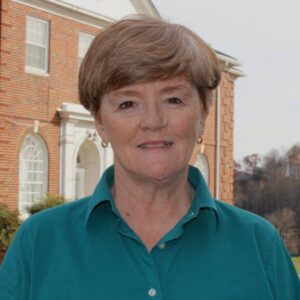
Whited, the longest-serving full-time faculty member at Ferrum College, has studied Twain’s connection to music since she wrote a master’s thesis on the topic at the College of William and Mary. Her presentation will examine how Twain’s lifelong appreciation for musical traditions ranging from spirituals and popular songs to opera influenced his writing, humor, social commentary, and character development.
“Dr. Whited has spent a distinguished career inspiring students through her scholarship and passion for literature,” said Ferrum College President Mirta Martin. “We are proud and grateful to see her share her expertise with the broader community through this engaging program, which highlights the enduring relevance of one of America’s greatest authors.”
Whited is the author and editor of numerous books and essays on fantasy literature, especially the Harry Potter series, as well as more realistic American literature. She is also the author of Murder, In Fact, a scholarly study of true crime fiction, and she has led discussion groups at the Franklin County Public Library and elsewhere on topics such as true crime novels and dystopian literature. She is a member of the Franklin County Community Chorus.
While Mark Twain is celebrated for his razor-sharp wit and literary realism, less well known is his lifelong interest in music, spanning both American popular music and the European grand operatic tradition. Influences upon him and his writing included spirituals and the Delta blues, the Presbyterian church, contemporary songwriters, classical composers such as Richard Wagner, and the habits of piano-playing and singing that filled his household in Hartford, Connecticut.
“The goal of our program is to illustrate the integral role that music played in the life of one of our greatest American authors,” said Whited. “As Samuel Langhorne Clemens (Twain’s real name), his own musical experience included every nineteenth-century form you can name: folk songs, hymns, spirituals, American popular and classical compositions, and European grand opera. He attended performances by prominent musicians of his day; all three of his daughters studied music, and he purchased expensive organ-type instruments for use in his own homes.”
Twain’s letters, personal journals, and novels such as Huckleberry Finn and Pudd’nhead Wilson reflect how Twain used music as a tool for social satire, character development, nostalgia, and humor. Throughout Twain’s public career, his writing about music illustrates the same key tension existing between Clemens and his famous persona, Mark Twain–between the serious writer/critic and the amateur, or “mucker” (as he termed it). For example, he enjoyed opera and also wrote, “I have attended operas, whenever I could not help it, for fourteen years now; I am sure I know of no agony comparable to the listening to an unfamiliar opera.” The evolution of Twain’s tastes and attitudes concerning music explain how his biographer Albert Bigelow Paine, who had earlier found the author “wanting in artistic taste,” could write that by age 70, Twain had “a passion for music.”
Mark Twain appeared often in Ferrum, the surrounding area, and England from the 1970s to 2023—as he was depicted by Professor Emeritus of Drama Rex Stephenson in about 150 shows based on Twain’s writings. (Twain died in 1910 and Stephenson produced several programs in 2010 to commemorate that date, as well as adapting a number of Twain’s novels for the stage). In the last play Stephenson directed before he died on August 13, 2025, You Caught Me Dancing, Assistant Professor Emily Blankenship-Tucker portrayed Katy Leary, who was a servant and loyal companion in the Clemens home for more than thirty years. As the play’s title suggests, she witnessed their passion for music in good times and hard times.
“During the sad, lonely final years of Clemens’ life, music became his constant solace,” said Whited. “He was sometimes an enthusiastic fan and sometimes a harsh critic: ‘We often feel sad in the presence of music without words,’ he wrote, ‘and often more than that in the presence of music without music.’”
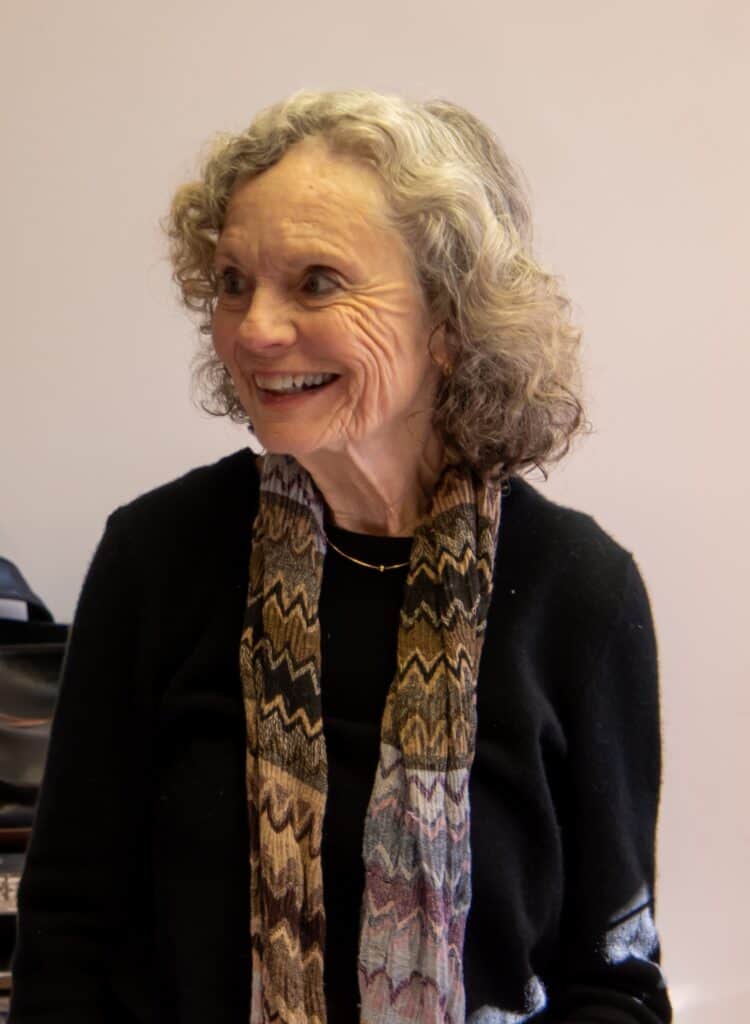
Fair Robey enjoyed a long career teaching music in the Franklin County Public Schools and currently serves as music director at Saint Peter’s-in-the-Mountains Episcopal Church. She has served as accompanist for many productions of the Blue Ridge Dinner Theatre at Ferrum College, most recently for The Music Man in March. Her son Austin is Director of Admissions at Mountaintop Montessori School in Charlottesville. They are both members of their family’s popular local band, The Robeys.
Photographs of Phoebe Needles and Fair Robey courtesy of Dr. Bob Pohlad